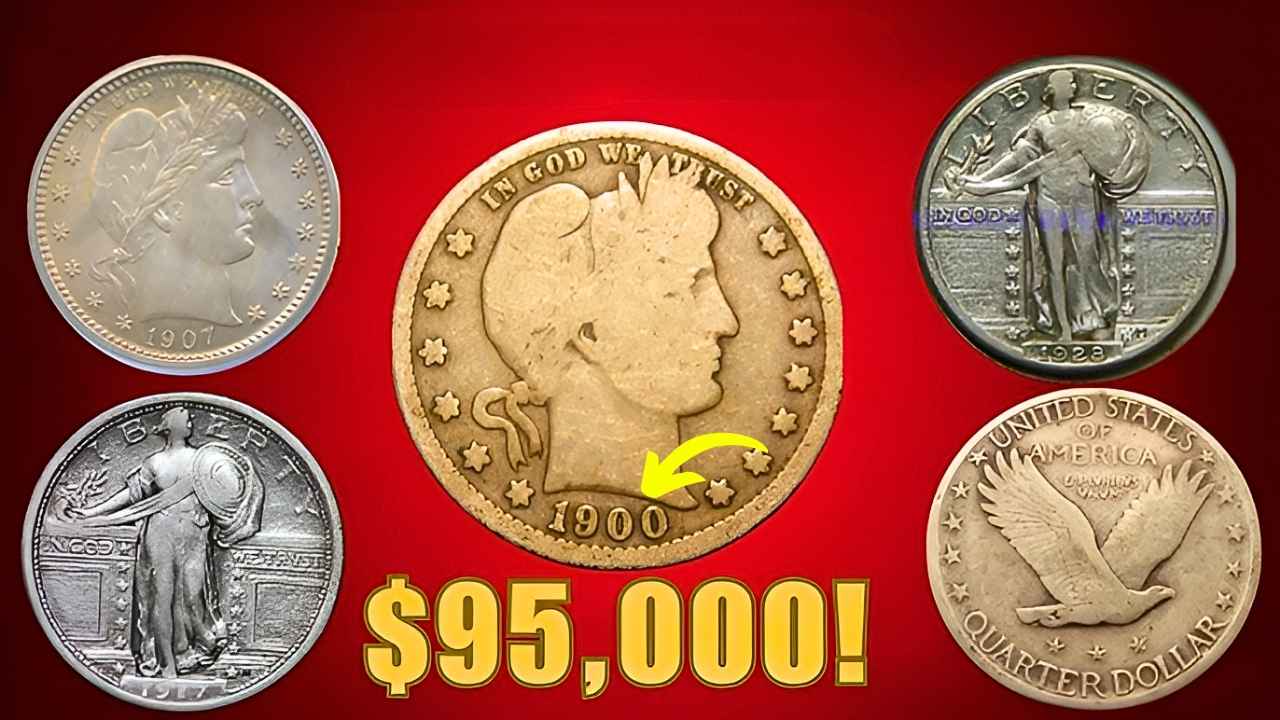
Rare Quarter Dollars : Coin collecting has always been a fascinating hobby, blending history, art, and economics into one pursuit. Among the most popular coins in the United States are quarter dollars, which have been minted since 1796. While most quarters are worth only their face value, certain rare editions can fetch thousands of dollars in auctions or private sales. These coins are not only valuable because of their scarcity but also because of their unique stories, minting errors, and historical significance. In this article, we will explore five rare quarter dollars that could be worth thousands, giving you insight into what makes them so special and why collectors are willing to pay such high prices for them.
1932 Washington Quarter
The Washington quarter was first introduced in 1932 to commemorate the 200th anniversary of George Washington’s birth. While millions of these coins were produced, the ones minted in Denver and San Francisco are particularly rare. The 1932-D and 1932-S quarters had very limited production runs, with only about 436,000 struck in Denver and 408,000 in San Francisco. Because of their low mintage, these coins are highly sought after by collectors. A well-preserved 1932-D or 1932-S Washington quarter can easily sell for thousands of dollars, especially if it is in uncirculated condition. Their rarity lies not only in the limited numbers but also in the fact that many were used in circulation, making pristine examples even harder to find.
1976 Bicentennial Quarter with Minting Errors
In 1976, the United States celebrated its bicentennial, and special quarters were issued featuring a unique reverse design with a colonial drummer. While these coins are common in circulation, certain error versions are extremely valuable. Some bicentennial quarters were struck on silver planchets instead of the standard copper-nickel, and others have double die errors that make the design appear doubled. Collectors prize these error coins because they represent rare mistakes in the minting process. Depending on the type of error and the condition of the coin, a bicentennial quarter can be worth hundreds or even thousands of dollars. It is a reminder that sometimes mistakes can turn ordinary coins into extraordinary treasures.
2004 Wisconsin State Quarter with Extra Leaf
The Wisconsin state quarter, part of the 50 State Quarters program, was released in 2004. Most of these coins feature a cow, a wheel of cheese, and an ear of corn. However, a small number of quarters minted in Denver have an unusual feature: an extra leaf on the corn stalk. There are two varieties of this error, known as the “extra high leaf” and the “extra low leaf.” These coins quickly became famous among collectors because of their rarity and the mystery surrounding how the error occurred. Some speculate it was intentional, while others believe it was a simple mistake during the minting process. Regardless of the cause, these quarters can sell for thousands of dollars, especially in mint condition.
1937 Washington Quarter with Doubled Die Obverse
Another rare quarter that excites collectors is the 1937 Washington quarter with a doubled die obverse. This error occurs when the coin’s design is accidentally struck twice, creating a doubled image. On the 1937 quarter, the doubling is most noticeable on the words “In God We Trust” and “Liberty.” Because error coins are always produced in limited numbers, they are highly prized by collectors. The 1937 doubled die quarter is particularly valuable because it combines historical significance with a striking visual error. Depending on its condition, this coin can be worth several thousand dollars, making it a prized addition to any collection.
1964 Silver Washington Quarter
Before 1965, quarters were made of 90 percent silver. In 1964, millions of silver quarters were minted, but they became increasingly rare after the U.S. Mint switched to a copper-nickel composition in 1965. While most 1964 silver quarters are worth only a few dollars based on their silver content, certain rare varieties and high-grade examples can fetch much more. Collectors especially value proof versions and coins that have been preserved in pristine condition. In some cases, a 1964 silver quarter can sell for hundreds or even thousands, depending on its rarity and grade. This coin represents the end of an era, as it was the last year quarters were made with silver, adding to its historical importance.
Why Rare Quarters Are Valuable
The value of rare quarters comes from a combination of factors: scarcity, condition, historical significance, and collector demand. Coins with low mintage numbers are naturally harder to find, while minting errors create unique variations that intrigue collectors. Condition also plays a major role, as coins that have been preserved without scratches, wear, or discoloration are worth far more than those that have been circulated. Finally, collector demand drives prices upward, as enthusiasts are willing to pay high amounts to complete their collections or own a piece of history.
Tips for Identifying Rare Quarters
If you are interested in finding rare quarters, there are a few tips to keep in mind. First, always check the mint mark, which indicates where the coin was produced. Coins from certain mints, like Denver or San Francisco, are often rarer. Second, look for unusual features such as doubled images, extra details, or off-center strikes, which may indicate minting errors. Third, pay attention to the year, as certain years are known for rare varieties. Finally, consider having your coins professionally graded, as this can help determine their authenticity and value.

Conclusion
Rare quarter dollars are more than just pieces of currency; they are windows into history, art, and craftsmanship. From the 1932 Washington quarter to the 2004 Wisconsin extra leaf quarter, these coins demonstrate how scarcity and uniqueness can transform everyday objects into valuable treasures. Whether you are a seasoned collector or just starting out, keeping an eye out for these rare quarters could lead to an exciting discovery worth thousands of dollars. Coin collecting is not only about financial gain but also about preserving history and appreciating the beauty of these small yet significant artifacts.